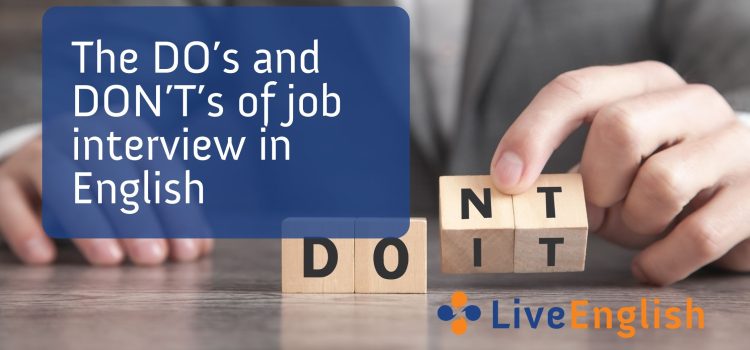
The Do’s and Don’ts of a Job Interview in English
Close your eyes and count to 10. Does it feel long? That’s roughly how long you have to make a first impression. People say you make it in your first 10 steps, your first 10 words, and your first 10 seconds.
In a job interview, that first impression is crucial, and yet I’ve interviewed many candidates who speak excellent English but don’t use the English they actually know. People who speak a lot of casual English with native speakers often pick up habits worth keeping in check in an interview, where a polished first impression really matters.
So here are the do’s and don’ts of a job interview in English.
The do’s of a job interview in English
- DO use formal language. To show you can handle advanced structures and the right register for business, speak in polite, formal English.
- DO use buzzwords. Buzzwords are the terms people use when they talk about your field, such as “referrals”, “renewals”, “quality service” or “strict time management”. Know the ones that matter in your industry.
- DO research the company. Every company is different. Before the interview, ask yourself what makes this one special and how its values fit your personality.
- DO practise common interview questions. The questions are fairly predictable, so think through your answers in advance, especially tricky ones like your strengths and weaknesses, and make sure you have the English to express them confidently.
- DO make eye contact. It shows you’re confident and at ease, not nervous.
- DO articulate your answers clearly and concisely. Keep answers clear and to the point, without repeating yourself, and pause now and then to leave room for the interviewer’s questions or comments.
- DO ask questions about the company and the role. Show genuine interest by asking relevant questions. When you’re asked at the end whether you have any, always have one ready.
- DO follow up with a thank-you note. Let the interviewer know the role feels right for you, either before you leave the room or in a short email thanking them for their time.
The don’ts of a job interview in English
- DON’T use slang or overly informal language. It can make you seem unprofessional and undersell your English communication skills.
- DON’T interrupt the interviewer. Cutting in can come across as impolite and disrespectful.
- DON’T appear disinterested or distracted. It makes you look unenthusiastic about the opportunity.
- DON’T speak negatively about former employers or colleagues. It can suggest you’re hard to work with or have a poor attitude.
- DON’T answer vaguely or evasively. Vague answers make you seem unprepared or unsure of your abilities, which lowers the interviewer’s confidence in you.
- DON’T rely on filler words like “um” or “ah”. They make you sound nervous or unprepared and chip away at your confidence.
- DON’T check your phone during the interview. Answering calls or messages looks unprofessional and disrespects the interviewer’s time.
- DON’T turn up unprepared or unfamiliar with the company. It signals you weren’t interested enough to do your homework.
- DON’T exaggerate your skills or qualifications. Gaps between your claims and your real abilities will surface and damage your credibility.
- DON’T be overconfident or arrogant. It can make you seem difficult to work with and leave a poor impression.
See how online English classes can help you feel more confident for your next job interview in English.
Frequently Asked Questions
How do I make a good first impression in an English job interview?
What kind of English should I use in a job interview?
What are the most common mistakes in an English job interview?
How can I prepare for a job interview in English?
Should I follow up after an English job interview?
Job Interview Express
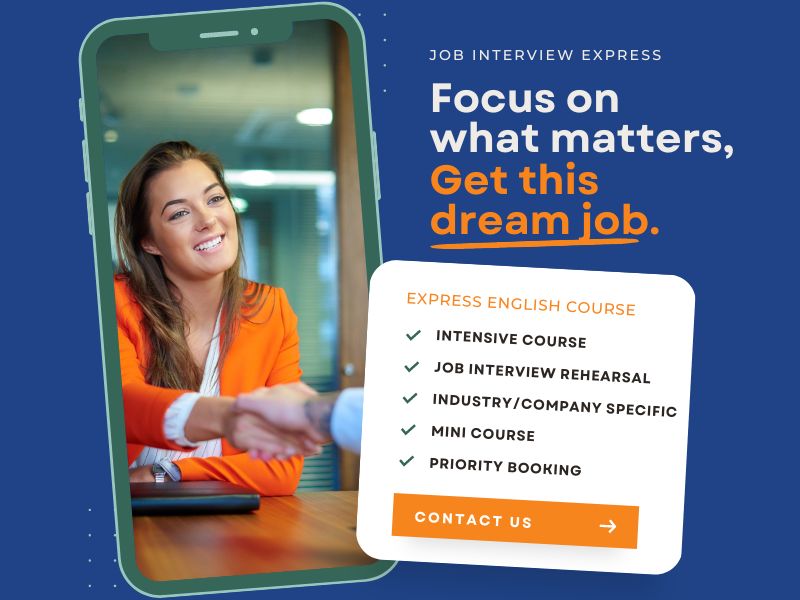
Have a job interview in English in the next few days? Our Job Interview Express is built for exactly that: an intensive preparation course of 5 PRO sessions (2.5 hours) to get you interview-ready fast. If you feel a little rusty, it gives you the confidence to walk in and land the role. Live English has coached over 10,000 professionals since 2007 with native, HR-experienced teachers.
It’s best to contact us before you register so we can check availability. If you have more time to prepare, explore our regular English courses.