The Top 6 Job Interview Faux Pas to Avoid
A job interview is won or lost in the first few minutes. Before you have answered a single question about your experience, the interviewer has already formed an impression from your handshake, your posture, and the way you treat the person at the front desk. Most candidates lose points not because they lack the right skills, but because of small habits they never think to correct.
1. The Dead Fish Handshake
A handshake should be firm, with a strong grip, a dry hand, and good eye contact. Don’t just offer your fingertips, and don’t crush the other person’s hand either. A limp, damp handshake is what interviewers call a dead fish, and it is remembered long after the interview ends. If your hands tend to get sweaty when you are nervous, keep a tissue in your pocket and dry them just before you walk in.
2. Rabbiting On (Talking Too Much)
Rabbiting on means talking too much, usually to fill silence or nerves. Ask questions, invite the interviewer into the conversation, and keep your answers focused. If the interviewer hasn’t had the chance to ask a question in thirty minutes, that is a sign to slow down and let the conversation breathe. A good rule: answer the question that was asked, add one relevant example, then stop.
3. Bad-Mouthing Past Employers
Saying negative things about a former employer, company, or colleague signals to the interviewer that you might do the same about them one day. Even if your last job was genuinely difficult, describe what you learned from it rather than what went wrong. If you struggled to fit in at your previous company, that is worth reflecting on privately, but the interview room is not the place to air it.
4. Being Rude to the Gatekeeper
Your first real impression is often made on the receptionist, not the interviewer. Many managers ask staff for feedback on how a candidate behaved while waiting, so treat everyone in the building as part of the interview. Look interested in your surroundings rather than buried in your phone. If you seem disengaged before the interview even starts, the interviewer may pick up on that energy too.
5. Becoming a Burden (Arriving Too Early)
Arriving late is an obvious problem, but arriving very early can create its own awkwardness. Turning up forty minutes ahead of schedule can put pressure on a busy office to entertain you. Aim to arrive about ten minutes early, and if you get there sooner, wait at a nearby café and walk in closer to your appointment time.
6. The Stare Down
Eye contact is a balancing act. Too much can feel intense, too little can look disinterested or evasive. Aim for steady, natural eye contact, breaking it occasionally the way you would in any normal conversation. Remember that the goal is to seem confident and attentive, not to win a staring contest.
| Faux pas | Why it hurts you | Quick fix |
|---|---|---|
| Weak handshake | Signals low confidence | Firm grip, dry hand, eye contact |
| Talking too much | Looks self-centered | Answer, one example, stop |
| Negative about old jobs | Suggests future complaints | Frame it as a lesson learned |
| Rude to staff | Feedback often reaches the interviewer | Be polite to everyone, always |
| Arriving too early | Puts pressure on the office | Wait nearby, arrive 10 minutes early |
| Too much or too little eye contact | Feels intense or disinterested | Keep it steady and natural |
How to Make Sure None of This Happens to You
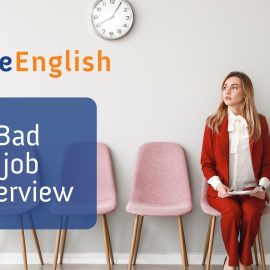
Most of these mistakes come from nerves rather than a lack of preparation. Practicing your answers out loud, rehearsing a firm handshake, and reviewing your body language beforehand all help you walk in calmer. If you want to see how a real interview can go wrong in ways you would never expect, read the story behind one candidate’s genuinely bad job interview, and for a deeper look at posture, gestures, and non-verbal signals, see our guide to body language in job interviews.
If your interview is in English and it isn’t your first language, the pressure to avoid these mistakes while also thinking in a second language can be significant. A focused job interview English course pairs targeted practice with a native-speaking teacher, so you build the confidence to concentrate on your answers instead of your nerves.
What is the biggest interview mistake candidates make?
Should I mention problems with a past employer?
Does being rude to reception staff really affect my chances?
How early should I arrive for a job interview?
Live English has coached 10,000+ professionals since 2007 with experienced native teachers. Practice your answers, your body language, and your English with a free trial lesson, no credit card required.