How Learning English Remotely Can Fit Around Your Life
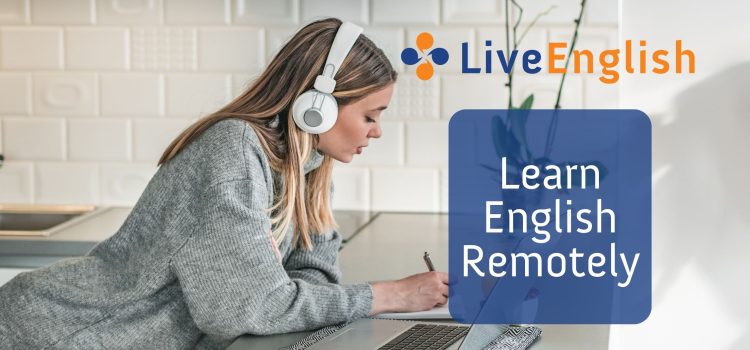
Learning English remotely means your teacher and you are never in the same room, you meet through a screen instead. Lessons, materials and feedback all travel through video calls, email and shared documents rather than a physical classroom. It sounds like a small difference, but it changes almost everything about how learning fits into a busy life: you don’t need to live in an English-speaking country, and you don’t even need to leave your home to become a confident, fluent speaker.
Why “no time” isn’t a good reason to wait
The most common excuse for not learning English is simply lack of time. Most people work full time and assume language learning requires hours they don’t have. But remote lessons remove the two biggest time costs of traditional classes: the commute to a language school, and the fixed group schedule that doesn’t move around your calendar. A 30 or 45-minute lesson from your kitchen table before work, or during a lunch break, adds up to real progress over a few months, without ever requiring you to “find” a free evening.
The pedagogical advantages of remote learning
You use authentic materials. Reading a textbook dialogue is a poor substitute for real language. Remote lessons make it easy for a teacher to pull in a current news article, a real email template or a video clip and build the lesson around it, so you’re learning the English people actually use today, not a simplified textbook version.
You get access to teachers, not just a course. Video calls put you in direct contact with a native-speaking teacher from anywhere in the world, rather than whoever happens to teach at the nearest school. That matters more than it sounds: a teacher who understands your specific goals, whether that’s a job interview, an exam or workplace confidence, will shape lessons around them in a way a generic course book can’t.
You train real listening, not reading-with-audio. Practising conversation without relying on subtitles or written text forces you to focus purely on sound and meaning, which is exactly the skill that traditional classroom learning under-trains. Free-flowing conversation with a teacher builds both fluency and listening comprehension at the same time.
The practical advantages of remote learning
Beyond pedagogy, remote learning simply fits real life better than a fixed classroom schedule. You set your own pace instead of moving at the speed of a group. Everything is personalised, from the topics you cover to how much homework you take on. It doesn’t matter where you live, a small town with no language school still gives you full access to qualified teachers. And lessons happen over video conferencing tools like Zoom, which most people already use daily for work, so there’s no new technology to learn on top of the language itself.
| Traditional classroom | Remote learning |
|---|---|
| Fixed schedule set by the school | You choose lesson times around your own calendar |
| Group pace, set by the average student | 1:1 pace, set entirely by your progress and goals |
| Limited to teachers near you | Access to teachers anywhere in the world |
| Commute time added to lesson time | Zero commute, lessons happen wherever you are |
What about isolation?
The most genuine drawback people mention with remote learning is a feeling of isolation, missing the social buzz of a physical classroom full of other students. This is a real concern, but it’s also one that’s easy to address: regular contact with the same teacher over time, rather than a rotating cast of substitutes, builds a relationship that feels far more personal than a large group class ever does. Many students say their remote teacher ends up knowing their goals, their weak points and their sense of humour better than a classroom teacher managing 15 students ever could.
Remote learning has gone mobile
You can now improve your English anytime, anywhere. Video conferencing apps work smoothly on a phone or tablet, so more people are connecting from wherever they happen to be rather than sitting at a desk. As long as you have an internet connection, a remote lesson can happen from a train, a waiting room or a hotel room during a business trip. And if your connection drops mid-lesson, most teachers can simply switch to a phone call so the lesson isn’t lost.
If you’re weighing up remote learning against a traditional course, our guide on group versus individual English classes for busy professionals goes deeper into the trade-offs, and our guide to learning English online covers what to look for in a platform or teacher. Since most remote lessons now run on video conferencing tools, it’s also worth reading our breakdown of English for video conferencing on Zoom, especially if you’re learning English partly for work meetings. To get started with a structured course built for remote, 1:1 learning, see our spoken English course.
Frequently asked questions
Is remote English learning as effective as in-person classes?
What equipment do I need for remote English lessons?
How do I stay motivated without a classroom around me?
Can I learn English remotely if my internet connection is unreliable?
Join 10,000+ professionals who have trusted Live English since 2007. Book a free trial lesson, no credit card required.