English Oral Exam: 7 Tips to Prepare and Succeed
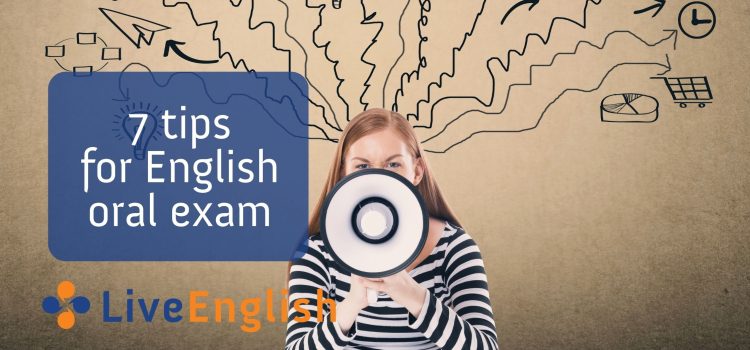
If you are honest, you probably do not enjoy exams, and an English speaking exam can feel worse when English is not your first language. The pressure of a timer, an examiner, and a topic you cannot prepare word for word in advance makes oral exams uniquely stressful. The good news is that oral exam performance is a skill you can train, just like listening or reading. Here are 7 practical tips to prepare properly.
1. Learn the Exact Format of Your Exam
“English oral exam” covers many different formats: a school exam, a Cambridge or IELTS speaking test, a TOEIC Speaking task, or a professional certification interview. Each has its own timing, task types and scoring criteria. Before you do anything else, find out exactly how many parts your exam has, how long each part lasts, and whether you speak to an examiner, a partner, or a microphone. Preparing for the wrong format wastes valuable study time.
2. Practise Out Loud, Every Day
Reading about English speaking does not train your mouth, your breathing, or your timing. Set aside 10 to 15 minutes a day to speak English out loud, even alone: describe your day, answer a sample question, or record yourself giving a one-minute opinion on a simple topic. The goal is to make speaking English feel normal, so it is one less thing to worry about on exam day.
“One advantage of this is…, but a disadvantage would be…”
3. Record Yourself and Listen Back
It feels uncomfortable the first few times, but recording your practice answers on your phone and listening back is one of the fastest ways to improve. You will hear filler words, unclear pronunciation, or answers that ramble without a clear structure, things you cannot notice while you are speaking.
4. Build a Small Toolkit of Flexible Phrases
You cannot memorise a full answer to every possible question, but you can prepare flexible phrases that work across many topics: ways to give an opinion, ways to disagree politely, ways to buy yourself a few seconds of thinking time. Having these ready reduces the panic of a completely blank mind.
- Giving an opinion: “From my point of view…”, “I’d say that…”, “What I find interesting is…”
- Buying thinking time: “That’s a good question, let me think…”, “There are a few ways to look at this…”
- Structuring a longer answer: “Firstly… Secondly… Overall, I believe…”
5. Time Yourself on Practice Answers
Most oral exams give you a strict time limit per task, often just one or two minutes. Practise answering sample questions against a timer so you learn to develop an idea fully without running out of time, or worse, running out of things to say after 20 seconds.
6. Get Real Feedback on Your Speaking
7. Simulate the Real Exam Conditions
In the final week before your exam, do at least one or two full practice runs under real conditions: same time limit, same number of questions, ideally with another person playing the role of examiner. Simulating the pressure in advance means the real exam feels familiar rather than shocking.
On the Day: Managing Nerves
- Breathe slowly before you start speaking. A rushed first sentence often sets a nervous tone for the rest of the answer.
- If you mishear or misunderstand a question, it is always acceptable to ask the examiner to repeat it.
- If you make a mistake, correct it briefly and keep going. Examiners score fluency and communication, not a flawless performance.
- Silence is worse than an imperfect answer. Keep talking, even if you need a moment to organise your thoughts out loud.
Final Thoughts
An oral exam rewards preparation you can hear. Practise speaking out loud daily, record and review your own answers, build a small set of flexible phrases, and get feedback from someone who can actually hear your English. If your speaking exam is part of a bigger test like the TOEIC, many of these same techniques carry over directly to that Speaking section. Working on your everyday conversation skills alongside exam prep also pays off. Live English’s spoken English courses are built around live, one-to-one speaking practice with a teacher, exactly the kind of feedback that self-study cannot replace, and our dedicated exam preparation courses target the specific exam you are sitting.
Frequently Asked Questions
How long should I prepare for an English oral exam?
Is it normal to feel nervous during a speaking exam?
What if I don’t understand the examiner’s question?
Should I memorise full answers before the exam?
Live English has coached over 10,000 professionals since 2007, with experienced native-speaking teachers and a free trial lesson, no credit card required. Start your free trial lesson today.