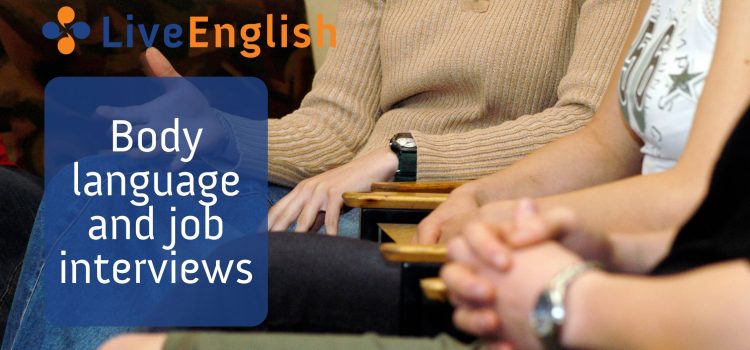
What Is Your Body Language Saying About You in Job Interviews?
Popular shows about reading body language, like Lie to Me and The Mentalist, are built on real research: a large part of what we communicate has nothing to do with the words we choose. In a job interview conducted in English, where you may already be concentrating hard on grammar and vocabulary, your body can quietly say things you never intended. Here is what to watch for and how to fix it.
Open gestures build trust
When you are speaking, use wide, open gestures. Holding your arms in front of you with the palms facing up is a good example, and it signals that you are genuine and have nothing to hide. Crossing your arms tends to make you look defensive, and keeping your hands in your pockets can make you look unsure of yourself. If you are not used to gesturing naturally, practice explaining your work history out loud in front of a mirror, paying attention to what your hands are doing.
Feet first: what your lower body reveals
The way you sit at the interview table tells the interviewer something about where you would rather be, since your feet often point, without you noticing, in the direction you subconsciously want to go. If you sit with your legs crossed and your feet pointed toward the door, you can look like you want to escape the situation. The same pattern often shows up in glances toward the door or a clock, and in the direction your shoulders are angled.
Smile with your eyes, not just your mouth
The easiest way to tell a genuine smile from a fake one is to look at the eyes. A fake smile only uses the muscles in the lower half of the face; a genuine smile also engages the muscles around the eyes. Try it in a mirror: cover the lower half of your face and force a smile, and the upper half will barely move. Now think of something that actually amuses you, and watch how your eyes change. Experienced interviewers know exactly what to look for here, so a genuine smile is worth more than a rehearsed one.
Nervous legs give you away
If you do cross your legs during the interview, stay aware of your feet. Shaking a foot or bouncing one leg on top of the other reads as nervousness. Interviewers are generally looking for someone who seems confident enough to do the job without coming across as arrogant, so calm, still legs help strike that balance.
Why body language matters so much in interviews
Keep in mind that first impressions form in the first 7 to 10 seconds of an interview, and that roughly 55% of communication happens through body language, compared to 38% through tone of voice and only 7% through the actual words chosen. If you are not sure what your body is saying to interviewers, practice in front of a mirror until the open, confident posture feels natural rather than performed.
Interviewers judge candidates on their overall impression of the person at least as much as, if not more than, their qualifications on paper. That means the work you put into a resume that stands out and a strong cover letter deserves to be matched by attention to how you present yourself in the room, whether that room is physical or on a video call. For other pitfalls to avoid, see our guide to top interview faux pas.
A quick before-the-interview checklist
- Practice your key answers out loud, watching your hands and posture in a mirror.
- Sit with both feet flat on the floor, facing the interviewer, rather than crossed toward the door.
- Warm up a genuine smile beforehand by thinking of something that actually makes you happy.
- Keep your shoulders open and facing the interviewer, even when you glance elsewhere briefly.
- If you tend to fidget, keep a pen or notebook in hand to give your hands a calm, purposeful task.
Frequently asked questions
How much of communication in a job interview is body language?
What body language signals nervousness in an interview?
How can I tell if my smile looks genuine on camera or in person?
Does body language matter as much in video interviews?
Want to walk into your next interview with confidence?
Practice real interview scenarios, including body language and delivery, with a native English teacher.